Volume III, Issue II Available for Order Now


SHE WAS FOUR YEARS OLD, SOMEWHERE IN SACRAMENTO, PLACED WITH A FOSTER FAMILY SHE DIDN’T KNOW. But there was a garden. Giant tomatoes. Potato bugs she’d never seen before. Somebody handed her something fresh from the ground and said: eat this.
“I didn’t even know what a hoe was,” Ms. Victoria Deal, a Sacramento‐based gardener, community educator, and creator of Seed to Skillet says. “But I loved it out there.”
That early taste of what food could be when it came from soil instead of a can, from care instead of a system, stayed somewhere inside Ms. Victoria for the next five decades. Through foster care and incarceration, through addiction and grief, through pregnancies shaped by a system that repeatedly failed to care for her, through the loss of land and time that can’t be returned, that early memory formed her. Seed to Skillet, the youth garden and community program she built from the ground up in Sacramento, is her life’s work to get back there and to make sure other people, especially children, don’t have to wait as long as she did.
“I don’t want children to grow up like me,” she says. “Eating from a can of salty food. Not knowing what their body is allergic to. Children should be tested for allergies when they’re young.”
Before she turned thirteen, she was arrested. She learned to lie about her name, her age, anything to keep from being sent back. By twenty-three she was pregnant with her first child and arrested, vulnerable and forced into a system designed to strip away our dignity. She would have multiple pregnancies in custody and out of it. During one, prison staff dismissed her repeated warnings that she was in labor. Her daughter was born prematurely, weighing just one pound, eleven and a half ounces. Her newborn daughter was taken from her, spending six months in the hospital while Ms. Victoria was put back in prison. Research tracking pregnancies in US prisons found that 6 percent ended in miscarriage.[1] That number lives behind a statistic. Ms. Victoria lives behind that number.
What the state gave her to eat during those years was a lesson in itself. In county jail: starch and salt, canned and boxed, one vegetable a day, hunger between meals. In prisons and jails, meals are blended together so you cannot tell what anything is. They call it dog food. “The food is designed for you to suffer,” she says plainly. No ice, no cold water, mosquitoes through windowless screens, artificial light where the sun should be. The body kept in a state of depletion. “Going to jail is unhealthy. It’s torture.”
She watched what that did to people. The fungal skin conditions from all that starch. The vitamin deficiencies from no sunlight, no fresh food, no choice. Black and Brown people are already carrying the weight of food apartheid on the outside. Nearly one in three Black Americans lives in food apartheid. Hypertension, diabetes, and a shortened life. The system is designed to keep us sick inside and outside, to make the line between freedom and incarceration blurred.
SEED TO SKILLET, THE YOUTH GARDEN AND COMMUNITY PROGRAM SHE BUILT FROM THE GROUND UP IN SACRAMENTO, IS HER LIFE’S WORK TO GET BACK THERE AND TO MAKE SURE OTHER PEOPLE, ESPECIALLY CHILDREN, DON’T HAVE TO WAIT AS LONG AS SHE DID.
In prison at Chowchilla, she strategically maneuvered her way into the kitchen to be closer to the food. A chef named Trong Buii came to teach cooking classes, a way to get out of your cell, but also a way back to herself. Ms. Victoria has learning disabilities and neurodivergence. School had never held her. But in that kitchen, measuring and converting and building flavors from what was available, something opened. “If you’re not educated or prepared to work within the food system,” she says, “you’re not gonna eat good.”
She learned the politics of food itself: who controls it, who produces it, who gets it, who doesn’t. She began to understand what had been done, systematically and on purpose, to her people’s relationship with land and nourishment. “We used to own eleven percent of the land,” she says. “Now we own two. A big baby used to weigh thirteen, fourteen pounds in my community. Now a big baby is eight pounds. They use our food to control us. They don’t want you to fill yourself with herbs and medicine. They’ll tell you it hasn’t been approved by the USDA and send you to the doctor for pharmaceuticals.”
When she came home, she stayed learning. She finished culinary arts at a community college, top of her class. She started cooking for five boarding homes at once, feeding neighbors who needed feeding. She farmed cannabis and kept a garden on a ranch where the owner let her grow whatever she wanted. She was building something, even when she didn’t have the name for it yet.
Her cousin, Ms. Betty McKay, who she described as a brilliant, glamour girl, came home from prison changed. Ms. Victoria had always looked up to her. Inspired, Betty pulled her into Essie Justice Group, a community of sisters with incarcerated loved ones doing boots-on-the-ground organizing. They blocked prisons during COVID to demand PPE for people inside. They did Black Mama bailouts. They took bills to the assembly to protect vulnerable people from being bullied out of their freedom by officers and other prisoners. Victoria, the “city girl living a country life”, found herself in the streets too, because she understood that the land question and the carceral question and the food question were the same question.
Feed Black Futures supported her through BAFFT, the Bay Area Food and Farming Training program run by Agroecology Commons. She apprenticed at Cultural Roots Nursery and with Farms to Grow through the Ujamaa Farmer Collective. Seed saving. Companion planting. Composting. Mulching. The ancestral knowledge, held in Black and Indigenous farming traditions for centuries, returned to her hands. She saved the money she made from those apprenticeships. Every dollar went toward what was coming.
One day she learned that her father, who was in and out of her life, who had forgiven her when she accidentally burned his house down, who had loved her fiercely, had left her an insurance policy. She didn’t discover it until she was thirty-four years old, after searching online for unclaimed funds. When she found out, she knew exactly what it was for.
“My dad loved me like God loves Jesus,” she says. She used what he left to build Seed to Skillet. It is sacred, a father’s love waiting to find its way home to his daughter through grief and then through soil. It is inheritance. It is ancestral.
She cried throughout our conversation. There is no other honest way to write that. She is a woman still moving through the weight of what was done to her, what was taken, what she could not give her own children because the state had taken her and because no one had taught her how to love and be loved. She was abused as a child and told to keep quiet about what happened in her mother’s house. She went into foster care and kept moving. She had children and did not always know how to love them through the fog of survival and addiction and incarceration. Reunited with her babies, she sat her daughters down and told them the truth about where her patterns came from and why she wasn’t always there. They were grateful. “That sickness is passed down to our families.” she says.
Black Americans are 60 percent more likely to be diagnosed with diabetes than white Americans. Black mothers die in childbirth at three times the rate.[2] The chronic illness, the early death, the hunger, the dispossession: it’s policy. Healing is also political.
Seed to Skillet is now in its fourth year of teaching. More than twenty students are signed up this season. They come to the garden, land Ms. Victoria does not own, land without running water or a bathroom, land she tends with her own hands and heart. Most of her students are children. Many are Taiwanese and Black, growing side by side, cultivating the foods their grandmothers grew, eating together, medicine from the soil.
“We’re bridging cultures,” she says. “They’re both getting access to their own food.”
"THEY USE OUR FOOD TO CONTROL US. THEY DON’T WANT YOU TO FILL YOURSELF WITH HERBS AND MEDICINE. THEY’LL TELL YOU IT HASN’T BEEN APPROVED BY THE USDA AND SEND YOU TO THE DOCTOR FOR PHARMACEUTICALS.”–VICTORIA DEAL
She hires homeless people from the community to work the land. One person found a home through this very work. Another woman, a mother who was fighting to get her children back, did. Now she and her kids are both in the program. “The kids said they’d rather go work in the garden than play,” Ms. Victoria says.
“Let your food be your medicine,” she says, and she means it spiritually, medically, politically, all at once. When a student in her program texted her saying he was thinking about getting a gun because he was exhausted and scared of getting bullied all the time, she called him. She talked him through it. She connected him to other organizations. “I’m a bridge,” she says. “We need to work together for these children. No one organization should do this alone.” Around the same time one of his peers shot and killed other teens in self-defense. That could have been him. It was somebody else’s baby and two other children are dead. He didn’t buy the gun.
Ms. Victoria does not own the ground she tends. This isn’t incidental. It is the condition that Black farmers and growers across this country have been forced into: dispossessed, displaced, denied the deeds and trusts and inheritances that might have passed land down through generations the way recipes pass through families. Over 90 percent of Black-owned farmland lost since 1910 has never been returned. She holds her relationship to the land the way she holds everything: with fierce, patient love.
Her eyes are clear and her vision is focused. She wants a 99-year land trust. An ADA-compliant farm where disabled people and children can put their hands in the earth. A petting zoo. Housing for community members who steward the land. Embodying Sankofa, she wants to teach her children and grandchildren the ancestral knowledge. She is planning for a future the state tried to kill inside of her.
Her father used to tell her: “Will is the power of mind.”
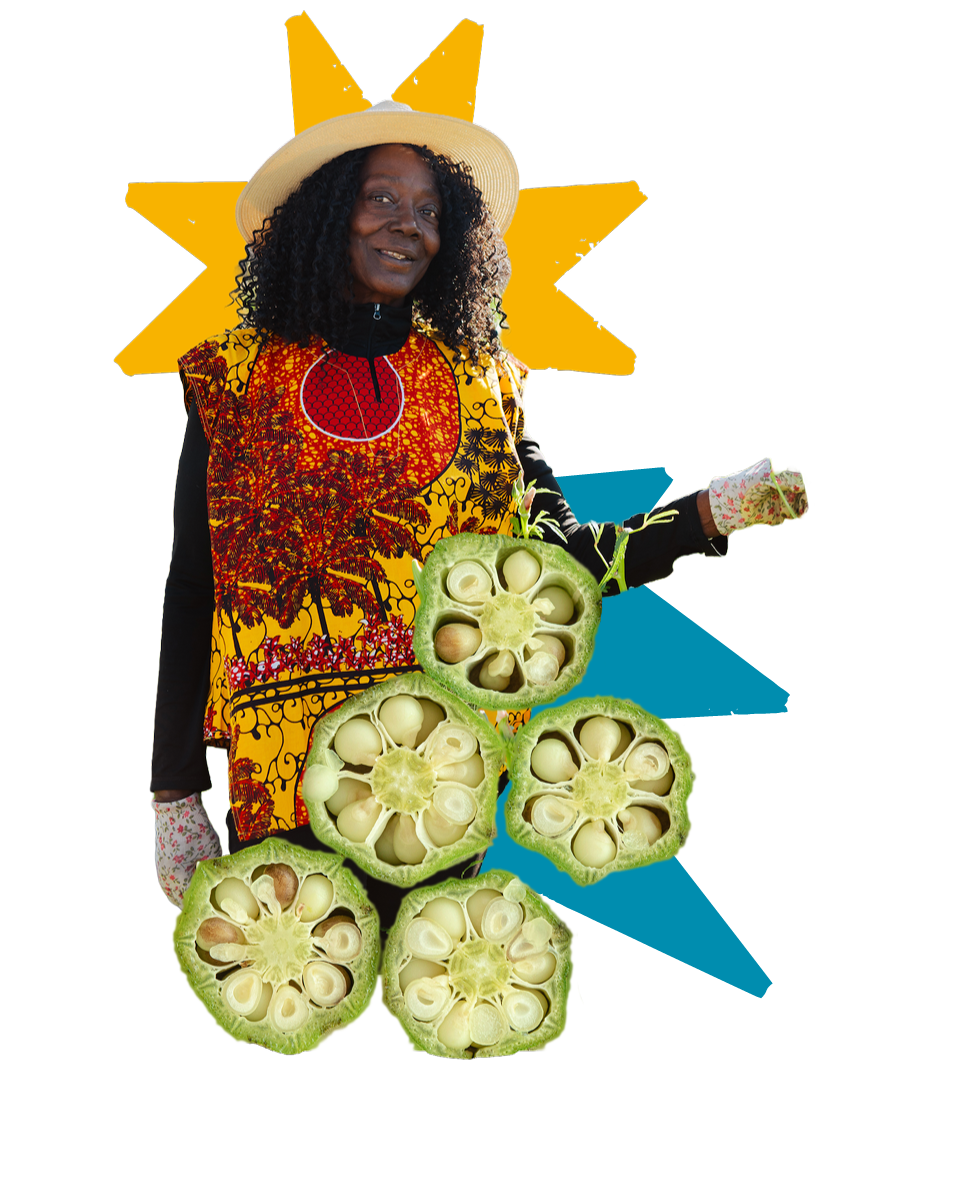
She is in her garden. She is teaching someone’s grandchild how to grow an okra plant, how to shuck a pea, how to put something in the ground, nourish it, and trust it to nourish you. She is doing what the system was designed to make impossible.
“You seem to be constantly returning back to the land to heal, to grow medicine.” I said to Ms. Victoria.
“That’s exactly what I’m doing.”