Volume III, Issue II Available for Order Now


“Grounding” is the practice of coming into relationship with people in ways that break down hierarchy and build shared understanding. In the spirit of Walter Rodney, it is not simply teaching or speaking to people, but reasoning together, learning together, and using that exchange to deepen political clarity and strengthen political action.
IN OUR INAUGURAL GROUNDING LETTER, the Land, Food, and Freedom Journal’s Wisdom Council: Asantewaa Harris, Malik Yakini, and Savi Horne, anchors this journal in honest dialogue by reflecting on a set of questions drawn from the themes that have arisen while curating this issue. Their decades of organizing and lived experiences offer clarity, helping you unearth lessons and critiques to sit with as you steep yourself in this issue. Let their reflections offer a foundation as you read on. This is a space to pause, to question, and to awaken your sense of what’s possible.
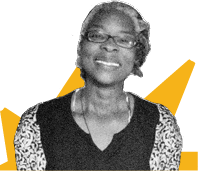
Mama Asantewaa: I am Brooklyn-born, but I’m currently living in New Jersey. I was fortunate enough and gifted to organize a farmer’s market in Bushwick. We had gone around to the farmer’s market at the time and had not seen Black farmers. So, we were determined to have Black farmers at our market. We started this farmer’s market in July, and the next month was Hurricane Katrina. Hurricane Katrina opened our eyes and our hearts to what we could be doing differently. While watching the news, I saw the trauma of what was happening to our people, and it was heartbreaking. I lived in Bushwick, and there was a neighbor across the street who was born in Slidell, Louisiana, whose family was calling him daily in tears and was emotional about everything that was not being reported. His family said they were calling the emergency numbers for help and just getting a busy signal. In response, I called on the community. I met at a church to plan with my neighbor from Louisiana, who was a deacon. We knew we needed to meet the need. I asked the community who would visit our farmer’s market to donate to the people of Louisiana. The call got so big that we were able to send off six truckloads of relief to Louisiana and Houston. This all happened without grants, without fundraising. I didn’t have a degree in this; it was just something I said, ‘Okay, let me see what I can do.’
Baba Malik: For me, it all started in 1969 when my eighth-grade teacher made the mistake of playing a Malcom X record in my class. Hearing Malcolm X just clarified a lot of things for me. After hearing him a few times and really understanding the concepts he was talking about, I decided that my life would be spent trying to contribute to the liberation of Black people. My life hasn’t been the same since. During that time, it was a very turbulent period in American history and a very turbulent period in Detroit history, because just two years earlier, Detroit had experienced a very bloody urban rebellion, or what at that time we called a riot, and the political landscape immediately after that was radicalized. I grew up in a period where I was engulfed in the struggle. The school I was at had students walking out and protesting. In that moment, you had to make a choice: You’re either with it, or you’re not. I find a lot of activists who grew up in later times that missed the 60s; they tend to get involved because of maybe a study group or something they read, for them it’s usually more of an intellectual thing. But for me, I was surrounded by it.
Mama Savi: I landed in the United States as a preteen from Jamaica in 1968, and everything was different. You had all these uprisings, assassinations, and police brutality, reproductive justice, and immigration rights movements happening. In 1995, I traveled to Zimbabwe and volunteered with an African-American NGO called Africare. In Zimbabwe, there was a point of contention because young college students were protesting against their government over a struggle for education and freedom of expression. Being there became a pivotal moment in my existence. I was going to villages, reading, and seeing firsthand how 12 million Black people were facing land theft. At the same time, I also witnessed the roles of the United States and Great Britain and how they basically solidified land rights for white people. In Zimbabwe, I was able to ground my sense and understanding of land struggles. After leaving Zimbabwe, I arrived in North Carolina around 1996 and witnessed Black farmers’ efforts to challenge discrimination through a class action lawsuit. I learned that you have to build momentum. You don’t bring in legal action unless you have grassroots actions in place. Bearing witness to the rise of Black farmers’ litigation against the USDA helped me organize my thoughts and get involved in movement strategies that I would say years later would lead to the National Black Food and Justice Alliance.
Mama Asantewaa: It’s important that we begin to identify the Land, Food, and Freedom Journal as a tool. That will give readers a frame of reference. It’s important to define so people know who and what. For example, the term ‘land steward,’ growing up, I never heard of one, but somehow now the term ‘land steward’ is being used everywhere. These are the types of things that need to be identified so the people can know who and what we are talking about.
Baba Malik: We have to make sure we aren’t following the course that many academics fall into, where they start talking to themselves in a vacuum chamber. I don’t see any indication that that’s happening with this project, and I don’t believe the people involved would allow this journal to go in that direction. But we have to make sure we are consciously connecting this to the people doing the work. The work looks like some people are organizers going door to door, organizing meetings, trying to move people to certain positions, some people are putting seeds in the ground, some people are organizing food co-ops, some people are healing with roots, there are all kinds of ways that people can engage with this work. So when we say ‘organizer,’ I hope we are thinking of it broadly. When it comes to this publication, it’s also important that we intentionally and directly connect intellectual discourse that takes place in the journal with the work that’s happening on the ground. I’ve seen examples of this, like the article that Rae Gomes wrote about the Uhuru co-op, which was both informative and directly tied to the current efforts to build Black food sovereignty by building Black food co-ops. It ended up being direct ammunition for people who are doing co-op work. In revolutionary organizing, many great teachers have taught us that there is a relationship between theory and practice. Theory without action is void, and action without theory is blind. There needs to be continual action between the doing and the ideas that drive it. I’m hoping the journal can be part of the interplay between theory and action.
Mama Savi: First, you have to acknowledge that what you’re attempting to do with the Land, Food, and Freedom Journal was done in the past. You had publications, whether it was the Crisis of the NAACP, Freedomways, or JET. So you had this series of publications that helped to move us forward. JET is controversial, but at the time, they captured moments in a more nuanced and digestible way. When I came to the US, JET was one of the magazines that often came to the house, and I would read it from cover to cover. But then, at a certain point, there was a pivot, because it no longer covered reality. At the time, I was going to a city college in Harlem, and there was so much social disintegration, disinvestment, poverty, and drug use. We needed tools that decipher ‘how did we get here’ and ‘how can we move forward.’ But unfortunately, that was no longer what JET could offer. I do, however, believe in the Land, Food, and Freedom Journal because you have an honest process. It’s not driven by cash flow; there isn’t money to be made by this publication. You also have multiple boards, so you have checks and balances in political education, thought, and grassroots involvement intertwined throughout. So for me, that village circularity of council or people coming together to reason out things makes this work. It also appeals to my JET-ness. Not in a crass way, but you can see beautiful photography throughout it—I couldn’t live without those aspects being a part of this journal. So when you think of this journal as liberatory, all of these factors are encompassing, including learning a new recipe and seeing the rootedness of the motherland in the dish. This journal shows fluid movement and grounds foodways in our collective struggle.
THEORY WITHOUT ACTION IS VOID, AND ACTION WITHOUT THEORY IS BLIND. THERE NEEDS TO BE CONTINUAL ACTION BETWEEN THE DOING AND THE IDEAS THAT DRIVE IT. I’M HOPING THE JOURNAL CAN BE PART OF THE INTERPLAY BETWEEN THEORY AND ACTION.
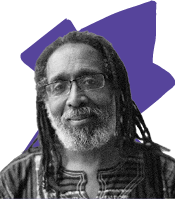
Baba Malik: Black food sovereignty work is situated in the wider Black liberation movement. A broad study of the Black liberation movement is important so that we can understand the context we’re operating in, what’s been tried in the past, what’s been successful, and what hasn’t been. Many books do this. Any books that discuss the civil rights movement, Black Power movement, the Black nationalist organizations like the Nation of Islam, the Universal Negro Improvement Association, all of those things we need to know. Additionally, when I say the Black liberation movement, understand that it is not a monolith; there are multiple tendencies within that. We need to be familiar with all of the ideological tendencies, but particularly those that are revolutionary, because you can have someone who’s for Black people and wants to see them advance, but they embrace capitalism. We want to make sure we prioritize studies that are anti-capitalist and designed to fundamentally shift power, rather than just painting Santa Claus brown. For contemporary texts, Dr. Monica White’s Freedom Farmers, Leah Penniman’s Farming While Black, Ashanté M. Reese’s Black Food Geographies, Michael Carter’s Africulture, Baba Rashid Nuri’s Growing Out Loud, and Will Allen’s The Good Food Revolution are all important.
Mama Savi: There are so many. But as a starting point, I recommend: Cheikh Anta Diop’s The African Origin of Civilization; Walter Rodney’s How Europe Underdeveloped Africa; Lerone Bennett’s Before the Mayflower; Carter G. Woodson’s The Mis-Education of the Negro; Eric Williams’s Capitalism and Slavery; Nikole Hannah-Jones’s The 1619 Project; Gerald Horne’s The Counter-Revolution of 1776; any writings by Malcolm X or Frederick Douglass; and June Jordan’s work on race, gender, and identity, specifically The Essential, Civil Wars, and Directed by Desire. These readings will serve as a grounding so you can make sense of everything happening today and understand that it’s all happened before.
Mama Asantewaa: We have to recognize that everyone is not on the same level on social media. In my opinion, it’s a waste of financial and mental energy. There have to be ways to access the information we want without relying on high-end equipment or technology. I’m speaking as an elder who witnesses people getting their information from Facebook, and that is not healthy. Additionally, there needs to be a change in how we connect with people. If you’re only connecting through Facebook, it’s difficult to really know how someone is doing. Across generations, there has to be communication between us—the love we have for each other cannot be expressed digitally.
Baba Malik: My sister Asantewaa and I have a different relationship with social media. I respect where she’s at with it. The space I’m in is that most of the rest of the world is moving rapidly, with digital and social media. I have lots of peers who don’t mess with any of that. They prefer to call me on the telephone, and I respect that. But I also see the reality of where these technologies are positioned in society. All technology is a double-edged sword. Frankly, technology in and of itself is not good or bad. So, it’s the ethics and the morals of the people using the technology that determine whether it’s used for good or bad. And given the ethics and morals of the people controlling it, as it relates to the technology in this society, we definitely should be super cautious. But I don’t think we need to be paranoid about it either. We’re not going to plan the revolution on Facebook. We’re smarter than that. But if we’re using it to get people to come out to a community discussion and by posting a flyer, 10,000 people can instantly see it, then there’s some value in that. So we have to be clear about what we’re going to say on social media, what we’re not going to say on social media—because everything is not for social media. But it’s a powerful tool in some ways. And so, we have to balance the complexity and have a set of values that guide how we operate.
Mama Savi: With the rise of AI and these super processing facilities, they are mining everything we have ever thought about. Audre Lorde said, ‘The master’s tools will never dismantle the master’s house.’ Right now, we are undergoing a consolidation of knowledge. While I see the danger of this hyper-vigilant space, I do see value in using social media as an organizing tool, simply because our past organizing was through mass mobilization—and as it currently stands, we don’t really have that right now. It’s time to put that back in place. I hate to admit it, but you cannot rule out the use of social media. For example, we saw how Kenyan activists used social media as a tool in their resistance movement toward their government. I believe that throughout Africa, organizers will continue to use social media as a tool for radical mobilization. But overall, political education throughout these efforts are important. That’s what’s going to hold people using social media accountable. We need to see a clear connection between mobilizing online and on the ground; both have to be toggled together.
Mama Asantewaa: We shouldn’t wait for a crisis to show up before we move forward. If we identify the work that needs to be done and the areas where it needs to be done, then that’s how we work towards a strengthened vision.
Baba Malik: One of the things that I’ve seen over the last 40 years is a lot of study groups. And the visible, measurable results that came out of those study groups could probably be put in a thimble. So there are a lot of people who have learned a lot of things and can quote a lot of people. Still, I haven’t seen where that knowledge has translated into institution-building, organization-building, or improving conditions for our people in any significant way. So I’m not against study groups, but again, they have to be tied to the actual action. I would rather have a person who was illiterate and sincere about helping their people, and willing to roll up their sleeves and get busy, than a person who had read all the theory and is just not grounded in doing things. But again, it’s not either or. Both action and theory are necessary. General Baker said our job is to ‘turn thinkers into fighters, and fighters into thinkers’. So we need both. At all times, you should be studying and practicing.
Mama Savi: I don’t want to get into anarchy. I think that’s always the danger when you stop learning in movement—for example, the attack on Black voting rights. In Louisiana, there are so many people being stripped of their right to vote. I can’t help but think to myself, what is the disconnect here? It’s because not enough people are looking back at history to understand the role Louisiana played in Black liberation, voting rights, education, and transportation to inform their strategies. These movements were led by Black people coming together to address a struggle collectively. Right now, we are working in silos. What we need to do is bring together people in food, environmental, climate, education, racial justice so we can work towards a collective fight. If we were to do that, the education we’d all get from it would be so huge that it would free up space to create an action-oriented agenda to get us free. Until that happens, I don’t recommend that people go out on the ground without direction. We need a movement based on education about where we are currently at with all these struggles impacting our people, to inform the strategies for how we move forward.
Mama Asantewaa: I had the chance to go to Mama Harriet Tubman’s home in Auburn, New York. It was so important for me to turn the doorknob, to walk up and down the stairs, holding on to the railings, and to touch the windows. For me, that was Sankofa. An elder who freed her people and didn’t have the GPS that we have today, didn’t shop at Whole Foods, in fact, she was a forager who was very connected to the foods growing in the ground—when she moved to Auburn, she was able to create a home for the elderly, the ill, and people who were disabled. She had a home that she was gifted, and she opened it up to her community. Again, she didn’t go to school to learn how to organize. So, I think we have to learn from the liberators and warriors, identify who they were, and what they did, and that in itself will create lessons.
Baba Malik: In my personal life, I draw tremendous inspiration from my ancestors. I have found that some of the work that I’ve been doing that I thought was of my own volition is actually of ancestral compulsion. I have an altar in my house, and I honor my ancestors regularly. I study traditions and organizational history, and, overall, that practice is extremely important to me. At the same time, we have to be wise and cautious in how we move with Sankofa, because Black people in the United States are diverse. The reality is that most of our people are Christian. Some Christians can see the compatibility of the two beliefs, but ancestor reverence is not promoted within Christian theology. Most contemporary Christians are taught to think that it’s somehow demonic. Then there’s a significant portion of our community who are Muslim, who don’t believe in pouring libations and honoring ancestors. As we’re trying to organize, we have to create a container broad enough to honor the various traditions within our community, while finding points of commonality where we can establish rituals and spaces everyone feels comfortable participating in. Malcolm X said, ‘You don’t catch hell because you’re a Baptist, and you don’t catch hell because you’re a Methodist...You catch hell because you’re a Black man...When you come out on the street, you pose a common front, a united front.’ There are some lessons to learn from that.
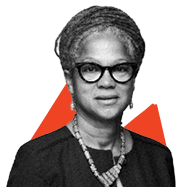
Mama Savi: Sankofa is our guiding light and the center of our spirituality and materiality. I feel that Sankofa grounds us in pan-Africanism. It will give us the knowledge needed to continue the fight for the liberation of our people and planet. Not everyone can afford to do this, but I recommend going to Gorée Island. I went, and I will never forget looking at the portal through the Door of No Return. All you see is a roaring ocean, and I thought oh my god, my people, where are we going? But then, standing there, you also realize, you can’t go back. You have to move forward. For me, that’s why Sankofa has to be grounded in pan-Africanism. It can’t be an appendage of the African American diaspora. We have to cloak Sankofa in the spirit of pan-Africanism because when we do so, it’ll become the starting point for the mobilization of our collective liberation.

