Volume III, Issue II Available for Order Now


AS CHANGEMAKERS ENGAGED IN MOVEMENT WORK, WE BELIEVE INHERENTLY IN THE POWER OF OUR ACTIONS AND THE EMBODIMENT OF OUR BELIEFS AS FORCES THAT WILL SHIFT THE SCALES IN FAVOR OF JUSTICE. However, we know change work in practice is tenuous and mutable, especially on a large scale. Administration changes can decimate decades of progressive policy advances, and foundations may withdraw from commitments due to economic and political fluctuations. Communities are then forced to pivot and reprioritize, trying to do more with even less resources.
Inevitably, we are confronted by the limitations of our power and ability to realize the changes we want to see. The urgent need for systemic change, while incredibly valid and necessary, can eclipse our ability to recognize the relational scaffolding of trust, care, and vision that is the backbone of social transformation and liberation. This hidden infrastructure of societal change exists on the personal and interpersonal level. Without it, even the most effective organizers and collectives collapse under their own weight. Choosing to forge ahead without interrogating this imbalance may unwittingly drive us into burnout, moral injury, and a crisis of faith from not only institutional scale disappointments, but also self abandonment, moral arrogance, and relational harm within the movement. Our change work and visions of freedom cannot be solely focused on a systemic scale—it must also be done on a profoundly personal level, and refracted into the ways that we treat ourselves and one another.
Personal change, much like systemic change, requires a willingness to enter an often messy, deeply confrontational, and nonlinear journey inward before it can be reflected outward. Investigating our lived experiences and uncovering our subconscious beliefs about our own agency and relationship to power opens a portal to a higher dimension of changemaking: healing and transformation. Our ability to regain a clearer sense of our own personal, interpersonal, and systemic power is critical for our collective liberation.
In our program Spectrums for Movement Resiliency, we are building a political toolkit to support ourselves and our communities to dissect our organizational and individual arcs and move towards embodiment and wholeness. The following framework is a component of this toolkit we are developing.
While everyone’s path in change work is unique and encompasses many arcs, one particular arc was shared across our collective: an optimistic motivation to infiltrate a system to initiate the change from within, soon morphed into politicization upon our realization that the system was uninterested in our vision of change. In response to this, our outrage and cynicism radicalized and activated us into organizing. Channeling everything we’ve learned into changemaking with and in our communities, we navigated numerous misalignments, losses, conflict, and overcommitment. Our overexertion in our political arc of change left us jaded, burnt out, and morally injured, struggling to find a way forward.
We identified two spectrums weaving in and out of these phases of change: Macro - Micro Politics, and Externalization - Internalization of Power. Different events, environments, dynamics, and relationships will move us in and out of micro or macro politics, and externalizing or internalizing power. Like a swinging pendulum in perpetual motion, these two spectrums flow in and out of one another, and we imagine this motion in a figure-eight shape. This framework helps us make sense of our values, motivations, and behaviors pertaining to personal identity, community, and society at large through different phases of politicization. In doing so, it also helps us understand and relate to others who are different from ourselves from a place of nuance and neutrality rather than judgement.
Macropolitics is the more conventional way we tend to understand one’s politics: what are your values and beliefs about how society should operate? Micropolitics holds our more subtle and subconscious beliefs and values as expressed through how we treat ourselves and those immediately around us. One can hold a macropolitic and simultaneously contradict those values in their micropolitic. For example, a cis-man can claim to hold a feminist macropolitic about society at large, but perpetually disrespect and undermine women in leadership. An organizer may claim a healing justice macropolitic about her community, but she may neglect her own wellness, struggling to feel worthy of receiving rest and support. This concept is not new by any means, but this framework really helps us identify where we may be living in contradiction and identify misalignment.
PERSONAL CHANGE, MUCH LIKE SYSTEMIC CHANGE, REQUIRES A WILLINGNESS TO ENTER AN OFTEN MESSY, DEEPLY CONFRONTATIONAL, AND NONLINEAR JOURNEY INWARD BEFORE IT CAN BE REFLECTED OUTWARD.
Below are scenarios to contextualize several types of micro-political dynamics that show up between those who hold varied internalized and externalized relationships to power. Each dynamic offers different strengths and are driven by valid motives, but can gridlock pathways forward when imbalanced. Beneath each scenario are the named dynamics with self-reflection questions to guide discernment of an individual’s relationship to power and what may be within or outside of their scope of change, and a macro-political example to ground the dynamic in a familiar context.
A collective is trying to organize together. Some have known each other for many years and worked together, while others are getting to know each other in the collective space. One person is struggling with shared decision making—they resist the pace of collaboration, and are undermining others’ insights and needs, believing they have the best ideas. Another person decided to move ahead as the face of the collective, taking on opportunities that are highly visible independently and co-opting language and ideas from the collective without credit or consent. The third person is holding disproportionate labor of administration, communication, morale, conflict mediation, and relationship building in a way that is quietly inequitable and unrecognized. A fourth person has critiques for everyone, but rarely steps up to facilitate a solution or lead the execution on their own ideas. After a year of meetings, the collective has yet to land on common ground and move meaningful work forward.
Internalized Power Imbalance
Dynamic: Overgiver
Do you frequently give away time, labor, and space that is rightfully yours without much discernment for your own well-being? Do you feel taken for granted by others, but struggle to speak your needs or set boundaries? Do you derive your sense of self worth in your productivity?
Macropolitical Example: The “Mammy,” a racist caricature and depiction of Black women as loyal, happily self-sacrificing nurturers, and its presence endures in the media and present day social dynamics.
Externalized Power Imbalance
Dynamic: Leadership Deflection
Are you more comfortable in positions that allow you to criticize leadership rather than taking on leadership for yourself? Do you lose respect and trust for someone once they move into a position of leadership? Does your cynicism cause you to dismiss efforts by others because you feel it is a lost cause?
Macropolitical Example: Individuals opting out of political actions because their vote or actions “do not make a difference.”
Dynamic: Poster Child
Do you over identify with your skills and accolades to the point that you take up space, opportunities, resources and attention? Do you say yes to every opportunity, even though you may not have the true capacity or skills to honor that opportunity fully? Are you overly invested in visibility and validation for your sense of self worth, even at the expense of someone else?
Macropolitical Example: The American Red Cross is the most visible relief and aid organization in the world, meanwhile they hoard resources in obscure ways and grassroots relief efforts are overshadowed.
Dynamic: Covert Authoritarian
Do you quietly resent the collaborative process? Are you valuing the ends more than the means, the outcome more than the relationships? How are you overlooking the validity of others’ vision, input, skills, and contributions? Is it possible you feel entitled to authority and undermine others?
Macropolitical Example: Government institutions that host community advisory groups for the optics of collaboration, but ultimately make decisions independently and move at the pace of political urgency.
A Black woman is hired as the director of a grassroots neighborhood organization following a tumultuous end of the previous white woman director’s tenure. Most of her background is in academia and nonprofit administration. She was hired because the community organized against racist dynamics with previous white directors, demanding a Black director. She is excited about being the first Black woman leading this particular organization and expects to click right away with the community. However, the community is still reeling from the last director, and some distrust her because of her academic privilege. Her new fundraising campaign was successful, but feels exploitative to the community. She is struggling to take accountability because she feels like the critiques are targeting her because she is a woman. The community is split between those who believe they should rally to support her, and those who believe she ought to be “cancelled.”
Internalized Power Imbalance
Dynamic: Representation on a Pedestal
Do you believe that community members who share your identities should inherently trust your leadership? Do you feel that your marginalized identities somehow makes your viewpoints and solutions more credible?
Do you overlook the shortcomings of leaders who share your identity? Is their success or failure in some way a reflection of you and your community?
Macropolitical Example: Vice President Kamala Harris’ “tough-on-crime” politics as a former district attorney, responsible for contributing to mass incarceration.
Externalized Power Imbalance
Dynamic: Weaponized Victimhood
Do you lose a sense of power and identity in mixed marginalized company? Do you instinctually and unintentionally center your marginalized identity during moments that call for personal accountability? Are you open to the possibility that you may also contribute to someone’s marginalization?
Macropolitical Example: The deflection of responsibility in the state of Israel’s formation and genocide of Palestinian people due to being victims of genocide themselves.
Dynamic: Assimilation & Cooptation
Do you value the outputs and learnings from institutions over those of your community? What are you willing to give up in exchange for legitimacy? Whose respect matters most to you? What is the line between what can be leveraged for advancement vs what is preserved out of dignity?
Macropolitical Example: Cultures across the world are studied and excavated, extracted, and exploited by the academy in the name of higher learning, often by academics who are not of those cultures.
Dynamic: Woke-Shaming
Do you judge others for not being as politicized or activated as you? Are you stuck in the ego-trap of policing others’ values and actions without trying to connect with them or understand why they may hold those perspectives? Do you have a “cancel culture” instinct to publicly drag someone who is being de-pedastalized?
Macropolitical Example: “Vegan Elitists” have an intense and dogmatic judgment of those who consume animal products without holding nuance for things like class and cultural differences.
How can you relate to these scenarios and dynamics? When you reflect on your personal arc, which imbalances did you experience, both on the giving and receiving ends? Which of these questions brought up a reaction in your body? Where in the body did you feel it? Did it trigger a memory of an experience or of a particular relationship?
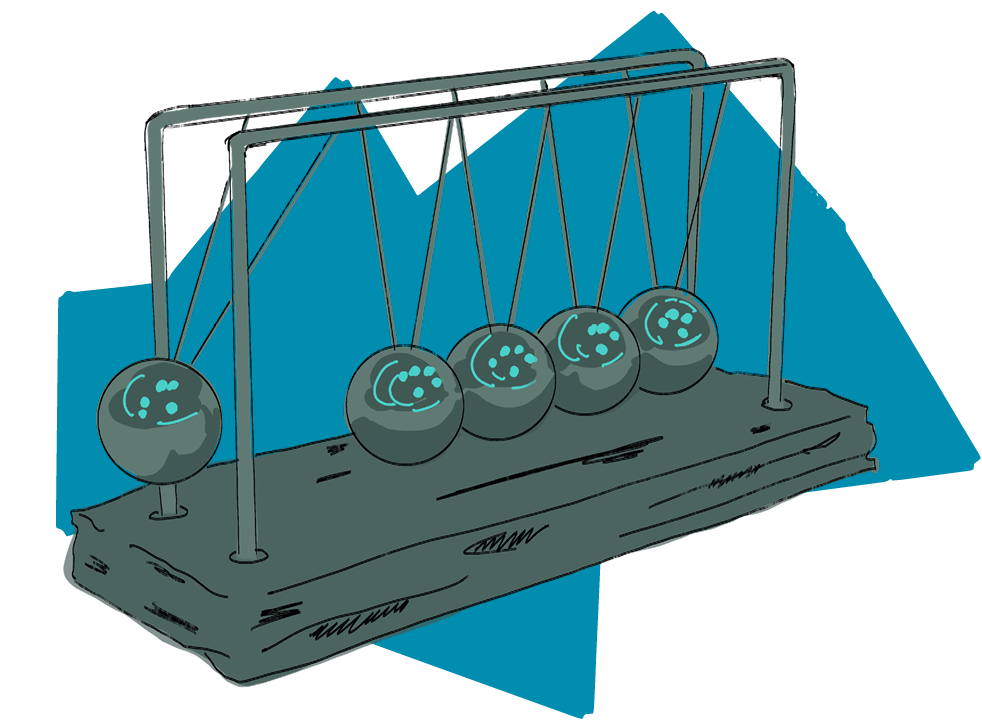
The swinging pendulum moving in and out of these spectrums is natural. Balance is not stillness, it requires constant motion. And contradiction, conflict, and discomfort are inevitabilities in changework. Therefore, embracing fluidity, nuance, and discomfort are necessary in our path toward freedom. The Arc of Complexity is not about demonizing people or ourselves, nor is it about normalizing harm and abuse. It is about learning to engage with this swinging motion mindfully aware that complexity is a normal aspect of change, and surrendering to the ways change can be uncomfortable. Living in nuance gives us permission to exist in the complexity of what it means to not only be changemakers, but the subjects of change as well. Tricia Hersey writes it best in Rest Is Resistance: A Manifesto: “I want us to understand that nuance is freeing and freedom…Everyone brings with them an origin story, a history, and identities that are interconnected” (123).
When we come into deeper understanding and acceptance of how our micropolitics intersect with our expressions of internalized and externalized power, we are able to see the swinging pendulum of change of macropolitics in full clarity. Macro and micro politics serve as mirrors to one another: fractaling from the universe to the self, and the self to the universe. In seeing the connection between the two, we can begin to take accountability for our individual part in the energetic dynamics at play on not only an interpersonal and geopolitical scale, but a spiritual scale as well. In Soul Talk, Sonia Sanchez described this engagement with change to Dr. Hull as the “wide, long battle” waged “on a very spiritual level” (8).
Exploring your own nuance and moving into understanding others’ is an act of healing, transformation, and liberation in praxis. Instead of forging ahead and barreling against the obstacles impeding our visions of change, we soften, see the wider moment and seek flow with our intuitive selves and with our communal needs in mind. This higher dimension of changemaking gives us the ability to discern the difference between what we can and cannot control. We can’t change others. Change is a personal choice—it begins with you and it is the hardest work you can do. But it’s worth it. Our freedom depends on it.

