Volume III, Issue II Available for Order Now


These responses offer expert legal guidance from attorneys Nadine Atkinson-Flowers, Esq. and Sylviane Lezama, Esq. Disclaimer: This information is for general education purposes only. It is not legal advice. Contact an attorney if you are navigating a specific legal case.
Atkinson-Flowers: All people (citizens and non citizens alike) have basic rights under the US Constitution. These include the right to remain silent (because you do not have to say anything about any situation). You also have the right to refuse a search of your property or person unless a warrant is presented to you. If they forcibly conduct the search without a warrant, record what happens as soon as possible and share with an attorney. You also have the right to get an attorney. As it relates to immigration cases, persons are not entitled to an attorney at government expense– but you can seek the assistance of attorneys at their own costs or use an attorney whose services are offered low bono (reduced cost) or pro bono (free).
Lezama: You have the most rights in your home or in private areas. If ICE approaches you, in all circumstances, you have the right to remain silent, you have the right to refuse that they search your belongings, you have the right to refuse to sign anything they give you. In your home, you have the right to refuse them entry. Do not open your door even a little.When they knock, you just state “I do not consent to entry” Then exercise the right to remain silent. If they have an “administrative” warrant, do not open your door. Only a judicial warrant gives ICE the right to enter private locations. A judicial warrant is signed and dated by a Federal District Court Judge. In public, you can ask, “am I free to leave?” and walk away calmly. If you are told no, ask to speak to a lawyer.
Atkinson-Flowers: Undocumented people should give copies and or originals of important documents to trusted people. Such documents include passports, I-94s, immigration benefit filings, any A-number, as well as any proof of how they came to the US. They should arrange alternative emergency pickups for children in the event they are detained. They should urgently seek legal advice if there are issues that could put them in deportation court. Remember that a visa overstay can still lead to deportation court. If people have criminal law issues they are advised to seek proper legal advice sooner than later.
If an undocumented person is picked up by ICE, do not sign any document without speaking with an attorney first. There are many different forms that are part of immigration cases, and signing something can result in a person losing a possible immigration benefit.

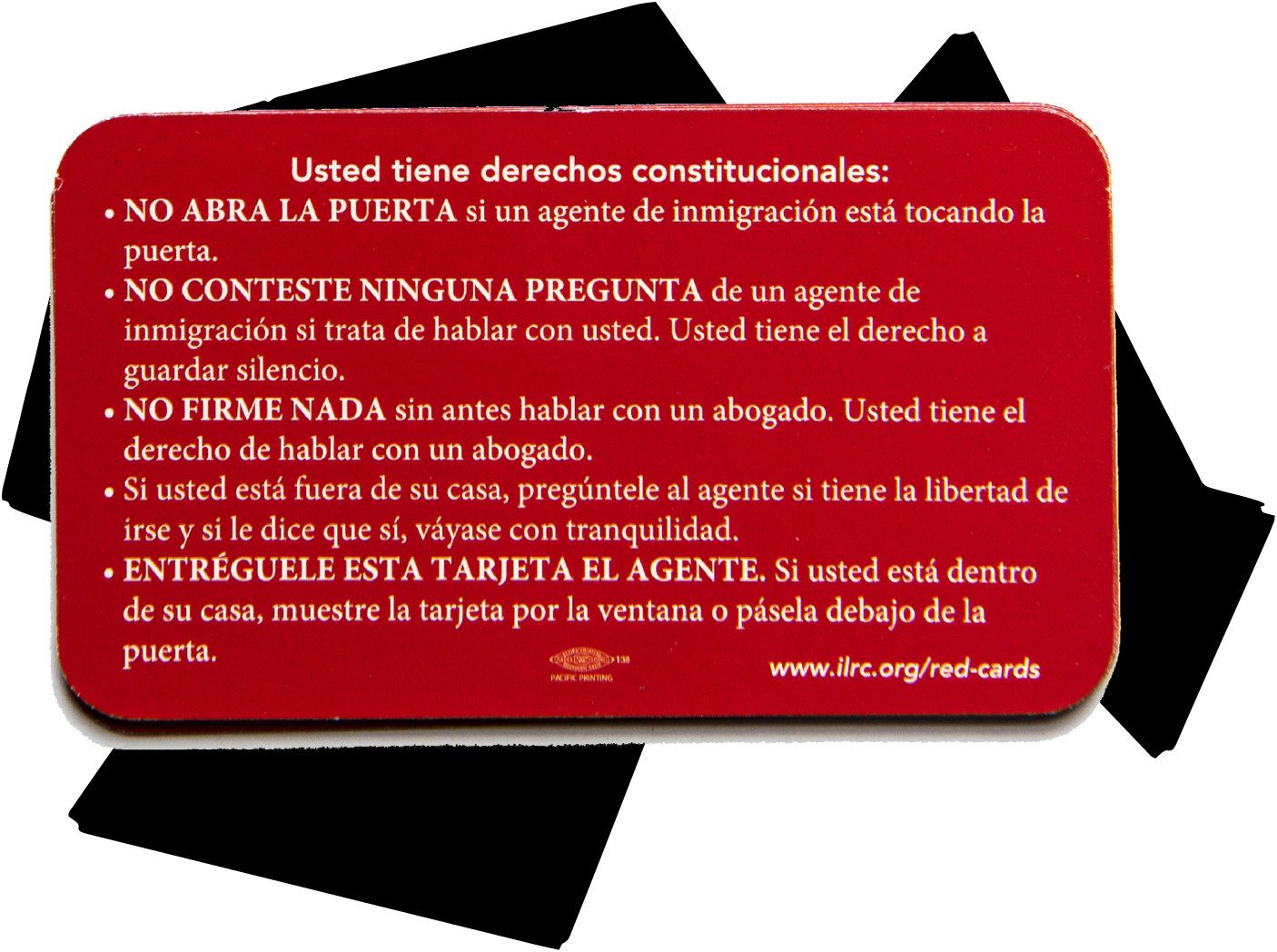
Lezama: In case of an emergency with ICE you should have a family plan ready. Store it in a safe, private place in your home with the following documents:
Keep the plan in a private area in your home. Inform all adults (and trusted adolescents) in your home where to find these documents. Inform a trusted adult outside your home where these documents can be found in case of an emergency.
Atkinson-Flowers: Employers must allow ICE agents to access those generally public areas of the business as would be usual. If they seek access to private spaces without a warrant or subpoena, employers can deny that access verbally and in writing and contact an attorney. If they persist, the employer should document everything, and contact an attorney.
Lezama: Employers have the right to demand to see a judicial warrant to review the scope of the warrant and the judge’s signature. ICE only has access to public areas. All areas labeled “employees only” including private offices are protected. Employers do not have to give employee information or documents to ICE unless they have a judicial warrant that explains the scope of the warrant. Business records are private and without a warrant listing which records, ICE does not have the right to these. Prepare a plan. Train employees to not consent to entry and put up employee-only signs.
Atkinson-Flowers: Witnesses can record such occurrences while staying at a safe distance. Witnesses can ask questions if they see ICE encountering persons. Legal observers are volunteers who get specific training on what to do if they see such incidents. The more training people get the better they are able to support as their observations can later help attorneys and family members to quickly find persons who have been detained and may not be showing up in the ICE locator system online.
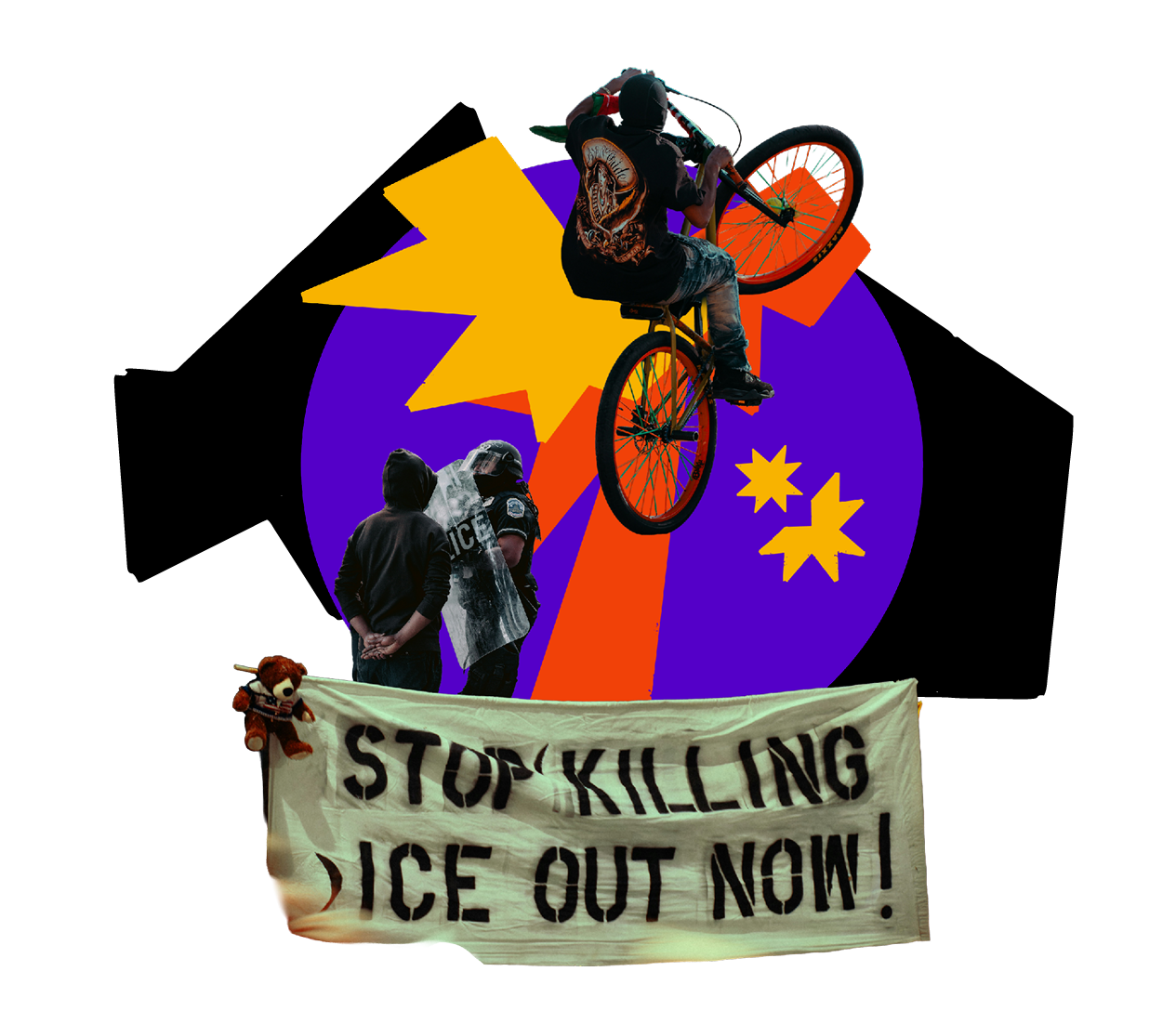
Lezama: Witnesses are protected under the first amendment, specifically freedom of speech and assembly. They can legally record ICE, video, audio, and even livestream so long as they are at a safe, reasonable distance. They can record ICE agents as long as they are in a public place or in a place where they have the right to be there. ICE cannot force witnesses to delete their recording, take the witness’ phone, or demand the person stop recording. The only time they can do these things is if the witness is interfering with their actions. A witness can communicate with the person being targeted, they can give them information such as advising them of their rights, they can ask questions of the ICE agents, such as “is this person free to leave?”, they can ask if the agents have a judicial warrant.
These responses offer reflections from Zoe Hollomon of Midwest Farmers of Color Collective (MFCC) and Carolina Gonzalez of HEAL Food Alliance (HEAL).
MFCC: When the surge began, we immediately began hosting group video calls to get first accounts of what our farmers were seeing and experiencing. We knew we needed to get accurate information to people, put together training to protect farmers, and coordinate with other organizations to bring together resources for aid. We paused our regular programs and projects and began fundraising and organizing rapid resource cycles to bring financial assistance directly to our impacted farmers and communities. They needed support to pay their rent and buy groceries, to install security cameras, and try to fortify their farms and gardens. People had property damage from ICE and cooperating local law enforcement officers and needed resources for repair. People were and are extremely traumatized and needed trauma-informed care and counseling for themselves and their children; many of our front-line organizations did as well. We sponsored legal training for individuals and for employers. We’ve been investing in partners who lead mutual aid and who source their food from BIPOC farmers. Internally, we’ve invested in increasing our digital security and safety protocols for our events and for staff while traveling. We’ve also needed to prepare for the reality that many of our farmers who supply our local communities with food and medicine don’t feel safe enough to farm this year, and so we’re bringing together resources for our BIPOC farm incubators and collectives to work in other ways and bring in volunteer brigades to help work the land, preserve food, and bring it to markets.
Our network is about 150 farmers of color. The majority of us are in Minnesota, but we also have farmers in Wisconsin, Iowa, Michigan, Illinois, the Dakotas, Indiana, and Ohio. About 65 percent of our members are immigrants-of-color farmers. So we’ve been major targets of the ICE surge in Minneapolis and before that in Chicago.
I want to speak to what it’s been like to have this surge wage war on our communities. It’s not an exaggeration to describe it like that, and the media definitely didn’t show the scale or severity of what was happening. When the waves hit the cities (Minneapolis and St. Paul), you couldn’t go a day without seeing people being beaten up, dragged and put into unmarked SUVs, agents pointing guns at people’s heads, slamming people to the ground, kneeling on their backs and necks, spraying chemicals in their faces, using gas bombs and batons. They were going door to door, and they kicked in people’s doors without warrants. They went to schools, churches, mosques, hospitals, grocery stores, and immigration courts. It wasn’t as if they had a list of people; they were targeting anyone who was Brown, and also anyone who dared to get in their way or speak up about basic human rights.
It was like being hunted. Our friends and family members are being put into detention centers without food and water, without bathrooms or blankets. Seeing that every day for months was so traumatizing. It puts a special kind of fear in you, even those of us who know police brutality well. It made living in constant fear a reality, and while it’s not really in the news anymore, we will all be dealing with the trauma of it for a long time.
At the same time, I’m so proud of the widespread community organizing that’s been going on in response to the surge. Protests and rallies organized by coalitions have brought together hundreds of thousands of people from around the country and beyond to resist this authoritarian regime and support our communities coming under attack. Coordinating with many different organizations to provide physical protection at bus stops, mosques, schools, and places of employment. Providing legal help and immigration lawyers, raising funds for travel costs for folks who had citizenship or legal asylum here, but were taken to detention centers in different states or to countries they had no lives or support in. There’s been a massive effort that’s trained thousands of people to be constitutional observers and recorders of what the agents have done and are doing. I believe the work of exposing and disrupting these attacks was a major reason ICE shifted to more suburban and rural areas.
Some sheriff departments started working with ICE in more of our rural areas and going onto people’s farms, trespassing and even damaging property. Many of the Know Your Rights training held early on were focused on urban areas, but when they moved to suburban and rural areas, we had to develop training for what to do on open land and farms without locked gates, buildings, or other barriers to keep them out. ICE had already been entering homes and businesses without proper warrants, going against constitutional mandates and the rights to due process guaranteed to anyone on US soil. On rural farms, this lack of rule-following made it extremely difficult to form opposing strategies. What do you do when there’s complete abandonment of all laws by agents of government?
All of these terrorizing tactics and what seemed very little recourse created a deep fear in people to go outside, go to work, to be alone at their farms and gardens, to go to their places of worship, go to the grocery store, and get basic things. So mutual aid was really important right away. Our experience with the murder of George Floyd, the uprising, and the networks of community-based security, safe space making, and mutual aid—especially Black-led mutual aid movements, was the same BIPOC community safety infrastructure that quickly resurfaced and mobilized and helped prepare us to respond quickly when ICE began harming our community. It was hard, especially for many BIPOC-led organizations that have been underfunded and underinvested in, so the infrastructure piece was a challenge when we had to spring into action. Most of us just worked through exhaustion and trauma and tried as best as we could to work collectively and be safe. The trauma of all of this will be long-lasting.
WHAT DO YOU DO WHEN THERE’S COMPLETE ABANDONMENT OF ALL LAWS BY AGENTS OF GOVERNMENT?
HEAL: We’ve shifted our internal priorities to support our members and the communities being impacted by immigration and ICE abuses. We’ve embedded immigration work into our long term strategic plan, recognizing that immigration justice can’t be separate from our food system. The urgency comes from understanding what’s truly at stake. We’re talking about families. We’re talking about communities. So when workers are detained, children are losing parents, families are losing stability, communities are losing trusted neighbors. The people who live in fear, these are the same people putting food on our tables. Most of those workers are disproportionately immigrant and migrant workers who harvest and process our food.
So when we see ICE doing these atrocious things, the actions need to increase on our end for multiple reasons, because the impacts are felt throughout the entire food system. At HEAL, we’ve been focused on supporting our members who are already doing frontline immigration work and also the worker justice movement in general. So we’re helping connect organizations across our sector, we’re sharing resources and creating spaces for more coordination. I think that’s really important across the entire food system. So earlier this year, in response to everything that was happening, we created a comprehensive ICE toolkit that includes red cards, know your rights information, and how to find someone who has been targeted.
MFCC: In some ways, I think that a lot of us who have been doing deeper food, farmer, and worker justice/ racial justice work have been building these partnerships for a long time because these issues are interconnected and intersectional. We live next to each other, we’re in families and businesses together, we’re friends and comrades. A lot of our organizations have been working together in coalitions on campaigns or programs.
Still, I do think that the heightened attacks remind us that we all need to share information to figure out how we can protect our people and fight back in increasingly coordinated and strategic ways. It’s not easy, especially for BIPOC and underfunded orgs. We’re still dealing with underinvestment and real vulnerabilities due to a lack of resources, and the disparities our communities face just have us dealing with a lot. The ways that funders can make us feel like there aren’t enough resources to support all of our organization’s efforts, when there is actually so much money to spread around. But I’m really proud of the ways we have worked together and continue to work together, especially in the face of changing and escalating tactics and a seeming lack of accountability or codes of conduct. But that’s also the story of those of us fighting oppression; we organize collectively to fight that divide-and-conquer strategy that oppressors always use. We’re letting ICE know: we’re not going to watch you just attack our people and not do anything.
I saw this quote from some Minneapolis protestors on social media saying, “No one thought the revolution would start in Minneapolis, except Prince.” I mean, people can F around and find out.
HEAL: We’re seeing both. One thing that we’re seeing across our alliance at HEAL is that more of our members are recognizing that these issues are deeply interconnected. When immigration workers are targeted, it affects families, workplaces, communities and our entire food system. So for example, we may have members who are a little bit separated from worker justice because they focus on animal advocacy. So what we’re trying to do is really pull them in to recognize how interconnected we are. So we’re seeing stronger connections across the HEAL alliance. Members who usually don’t support that work are showing up to our immigration calls asking, ‘what can they do’ and ‘how can they support.’
To support, we also created a resource that’s basically an Immigration Raids 101 for those members who are a bit more separated. At the same time, you know, there’s a lot of work that still needs to be done. Many organizations and movements have historically operated in silos. And obviously in the communities directly impacted by ICE, we’re still seeing a lot of fear. That’s when we all need to step up. So, building lasting solidarity requires trust. And I think that because we’ve been working in silos, that that trust needs to be built. So at HEAL, we’re really trying to work on the relationship building component. In doing so, we are uplifting the members who are doing the work and then just trying to support them. But of course, like I said, a lot of that work has been done in silos. So, I would say one of the biggest barriers that we have right now is that our work is completely interconnected, but because of the focus of our orgs, we don’t recognize that all the time.
MFCC: Definitely, we have to work together in more coordinated and strategic ways to fight this oppression and the major crises we’re facing. Justice, dignity, and the basic things that we all need for life are hanging in the balance. At Midwest Farmers of Color Collective, we don’t really separate farmers, farm workers, or land and water protectors; we recognize each other as healers, cultivators, and lifebringers. We’re certainly not a monolith, but we share so much in how we see the world, in having a relationship to the land and the natural world, and in our experience with our oppressors and extractors.
Many of our ag- and EJ-focused policy coalitions have been having conversations about the Farm Bill and federal policy because it’s so siloed, even though ag, our environment, and human health are interdependent. For example, we need an economic policy in this country that enables people to pay farmers and workers fair prices. There’s also very little labor protection for workers in the Farm Bill because big industry needs access to cheap labor to continue its extraction-based business model. Our movement and solutions have to be multifaceted, incorporating immigration, labor, health, environment, and economy.
The people who are really controlling things, like the very high-level corporate leaders and people who are leading Project 2025, are trying to take us back to the feudal system, and worse, they are destroying the critical natural resources we all rely on for survival. In the Midwest and the Northeast, the Great Lakes make up about 21 percent of the Earth’s fresh surface water. Think about that. Our ancestors, and most Indigenous cultures around the world, understand the idea of centering our existence on a relationship with our planet and with each other as stewards for future generations.
Several years ago, a Black farmer I met at a HEAL Summit said something so true: he said, “The oppressor wants to kill our sense of intimacy,” meaning our connection to each other and our world, and it’s true: if we lose that sense of belonging and connection, then they can conquer us easily.
Helping find ways for people to reconnect with each other, experientially, with our food and traditions and our place in nature is a big part of the task of addressing detachment. Art and food have such beautiful ways of bringing us back to these universal connections that have been lost in our conditioning under white supremacy. There’s real power in that.
HEAL: I do believe that there needs to be a broader movement against ICE. All of these issues are interconnected, whether we realize it or not. We’re looking at the same systems that exploit workers and concentrate corporate power. They undermine community well-being. And they’re often the ones driving inequities in our food system. For me, when I think of meaningful change, we really need a response that brings all of these groups together: the immigrant justice groups, labor organizations, farmers, etc. Not just the farm workers, the farmers, the public health leaders, everyone in the movement really needs to come together.
In my experience, what that would look like is moving beyond working in silos. We really need to start building shared strategies, shared analyses, and coordinated action. I think that’s one of the biggest things is we’re missing that component of the data, like what does the data say? And I’m not just talking about quantitative data, I’m talking about qualitative data. What are our communities saying? What do they need? Immigration justice, labor rights, and food sovereignty are all interconnected, and the only way that we can support each other is by collaborating together.

