Volume III, Issue II Available for Order Now


WHEN MONA JENKINS WAS A CHILD, HER GRANDFATHER TOOK HER INTO HIS BACKYARD FARM AND SHOWED HER A PATCH OF COTTON.
“He told me to reach in,” she recalls. “And I pricked myself.”
Her grandfather wanted to show her two things at once: the softness of the cotton and the pain caused in its production.
“He made me remember the lightness of the cotton, but also the blood shed for it. It was about remembering that hurt while also holding on to the family connection. It was one of the most important lessons I learned from my grandfather.”
The lesson reflected the way Jenkins was raised. Though her family left Lee County, Mississippi, for St. Louis, Missouri, her grandfather carried his roots with him. His backyard was a working farm, and Jenkins learned how caring for the land also meant caring for the people around them.
This was present in how everyone on her grandparents’ street knew one another and had connections. “It wasn’t about addresses like ‘4834 Sacramento Avenue’; it was ‘Mrs. Evans’ house’ or ‘Mr. Such-and-Such’s house.’ We used to sit on the front porch; everybody knew each other.”

The deeper meaning of a cooperative community was woven into Jenkins’ daily life through her grandparents’ generosity, such as her grandfather keeping up with the yardwork for a neighbor who had passed away. Or being handed an extra sweet potato pie by her grandmother, with instructions to take it to a neighbor, sit and visit, then report back. “It was a natural wellness check to make sure elders were getting to doctor’s appointments or had their medication. It was what we had to do to survive, given how much we were dealing with. I was raised to take care of my neighbors; we grew up in a cooperative without even knowing it because, culturally, that’s how we operate.”
As she got older, Jenkins gradually saw a decline in Black-led cooperative traditions. She traces the erosion of those traditions to gentrification, redlining, and neighborhood designs that discourage connection. “We tend to move every three to five years, so you don’t have time to get to know neighbors,” says Jenkins. “In historically Black neighborhoods, generations of families owned their homes, so they were connected. When gentrification happens, that connectedness breaks.”
To combat this, Jenkins began organizing in her neighborhood in Walnut Hills, Ohio. Thanks to her grandparents, she found an opening to start this through a universal language. “Food is the easiest entry point,” she says. “No matter how much I’ve traveled, I may not know the language, but I know the language of love communicated through food. It says, ‘I will take care of you, or you are welcome.’ It creates a broader community that tries to support each other without depending on systems that aren’t trying to help us thrive.”
Jenkins made a point of engaging more with her neighbors and building connections across her communities. As systemic injustices around food, housing, and health arose, she became known as the go-to person for listening and finding solutions. Jenkins sees these struggles in Black communities as interconnected and requiring a “whole-of-community” approach to rectify. She mentions a school board meeting she was asked to attend by residents due to a proposal to cut funding. “They were about to cut social workers, nurses, and resource coordinators—people so necessary for our babies. They’re losing housing, facing cuts to Medicaid and Medicare, and we’re funding wars for someone else’s personal wealth.”
For her, strategic organizing means refusing to silo issues that look at problems through snapshots rather than the full picture of how systems interact. “Why are there fast-food restaurants in my neighborhood, yet you want to block us from getting a grocery store? You want to block us from access to land so we can’t grow our own food? You want to block us from starting our own schools, and then get rid of the social workers and nurses who are holding it all together?”
“NO MATTER HOW MUCH I’VE TRAVELED, I MAY NOT KNOW THE LANGUAGE, BUT I KNOW THE LANGUAGE OF LOVE COMMUNICATED THROUGH FOOD. IT SAYS, ‘I WILL TAKE CARE OF YOU, OR YOU ARE WELCOME.’
Early in her organizing days, Jenkins felt pulled into a constant sense of urgency, responding to encampment notices, housing instability, and emergency needs. She showed up putting out fires in her community for years until she experienced an emergency of her own.
The building where her home was located was bought and converted into condos, which doubled her rent. Discriminatory policies blocked her from homeownership, and these circumstances added enormous stress. At 42, she felt a sharp pain radiating down her arm and realized she was having a heart attack. An ambulance would have taken almost half an hour to arrive, so she drove herself to the hospital, but she faced more obstacles there.
“They didn’t even believe I was having a heart attack. I had to convince them; I had to fight to not let them gaslight me. They delayed treatment for so long that I started dying,” she says. “My organs were shutting down. I saw a white light. My parents and my ancestors visited me and said, ‘You have to go back. You’re not done.’”

After treatment, they released Jenkins, attributing the heart attack to her diet. “Of course, that’s what they blamed it on. But there’s no grocery store in my neighborhood. Life expectancy in Walnut Hills is 64; across the street, in a white, affluent area, it’s 84. The difference is access to medical care.”
The experience marked a turning point for Jenkins. Rather than continuing to focus primarily on responding to crises, she began reassessing her approach to community organizing and looking for ways to address systemic needs before they became emergencies. That shift in perspective led her to think more broadly about the connections between food access, health, and community well-being.
Inspired by Dayton’s Gem City Market, a community-owned grocery cooperative that had established itself as a trusted health touchpoint for surrounding neighborhoods, Jenkins began envisioning a space where food access and healthcare could coexist under one roof. She saw an opportunity to create an entry point into the healthcare system that felt more accessible and less intimidating than a traditional medical setting.
“Reentering the healthcare system doesn’t have to start with a doctor’s appointment,” she says. “Maybe it starts with something as simple as checking your blood pressure. Do you even know how to use the machine? Do you know what those numbers mean?”
That vision ultimately became the foundation for Queen Mother’s Market, the community-cooperative grocery store Jenkins founded in 2024. More than a place to buy food, the market was designed as a gathering space where community members could access resources, build relationships, and strengthen community ties.
“At its core, the goal has always been to create a hub for community support, not just a grocery store,” she says. “We never wanted people to come only to purchase groceries. We wanted it to be a place where people could gather, interact with one another, and get to know their neighbors. A place where they could sit, learn, attend community meetings, and feel safe.”
She also collaborated with local medical students to create her own community health touchpoint. “When we’re in community spaces conducting wellness checks, medical students can help people monitor things like blood pressure and other basic health indicators. It’s a win-win situation; the medical students gain valuable hands-on experience, and community members become more comfortable engaging with healthcare. People can start paying attention to these numbers without immediately feeling afraid or overwhelmed.”
Jenkins’ health cooperative extends to mental health, encouraging members to lean on one another rather than involving the authorities. “If someone is having a mental health breakdown, we don’t call the police; we call ‘Miss White,’ who knows them and can show up to de-escalate. We build relationships of trust and connectedness so that even when we go through hard times, we are supported.”
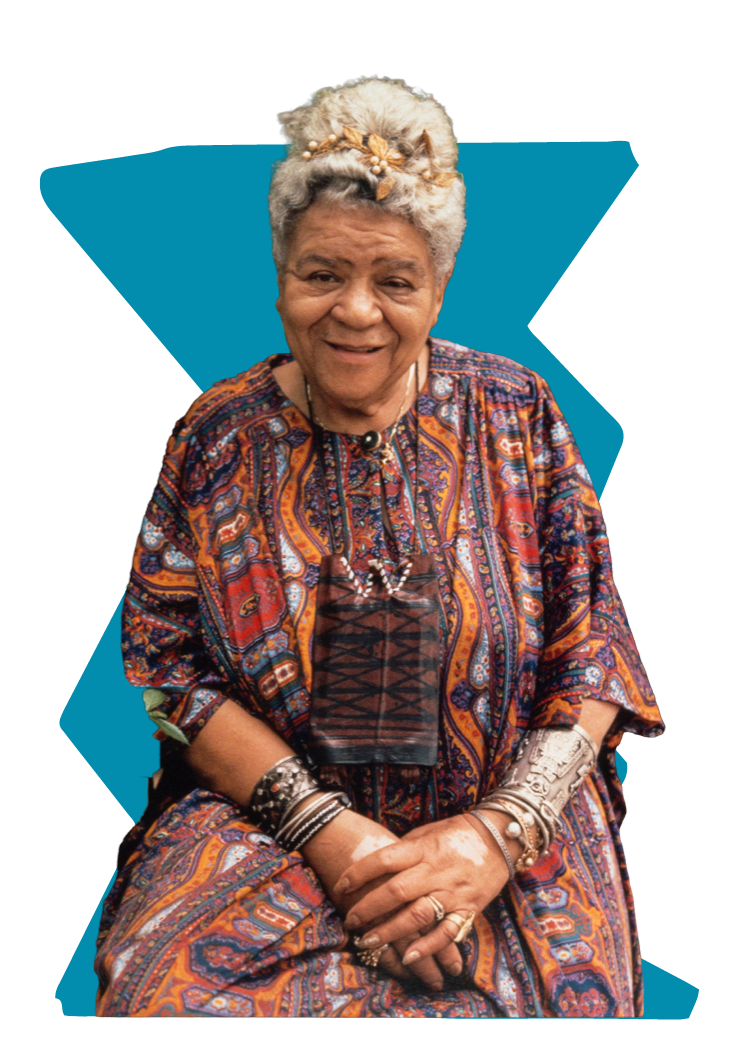
Her experience with having a heart attack, also made her reevaluate accessibility around life-saving resources. Jenkins inquired at her local libraries whether they had defibrillators. “The person I spoke with took that seriously,” she says. “They decided to do something about it, and before long, they began looking at how libraries throughout Cincinnati could be equipped with defibrillators. That’s what happens when people start asking questions and taking responsibility for the well-being of their communities.”
Jenkins connects Black cooperative traditions to deep ancestral ties, a view that became clearer to her during a trip to Ghana this past October. She met with Ghanaian community leaders, who welcomed her home and unexpectedly apologized for the harm that the Transatlantic Slave Trade had done to the diaspora. “Our history has been whitewashed. Many of us have been disconnected from our stories and from our origins,” she says. “So to go back home and hear people say, ‘We are sorry. We didn’t understand what was happening,’ was incredibly powerful. There was something healing in that acknowledgment. It didn’t erase the past, but it created space for reconciliation, understanding, and a deeper connection to who we are and where we come from.”
For Jenkins, the trip confirmed something she had been learning her entire life. From her grandfather’s backyard farm, from her grandmother sharing extra plates of food, from community gardens, health clinics, and grocery cooperatives. The work of building stronger communities isn’t about building something new; it’s about remembering what was already there. “It’s not about reversing,” she says. “It’s about reconciliation.”

