Volume III, Issue II Available for Order Now


For Cheryl Ife Griffin and all the ancestors, new and ancient, who quietly built the ground we stand on.
Malik Yakini smooth-walked to the front of the room, his quiet swagger drawing every eye. He wore a brown T-shirt reading “Self-Love,” the “o” replaced by the map of Africa, and black leather sneakers stamped boldly with the word “Black” on the soles, in case anyone missed the point.
We gathered deep inside one of the blandest hotels I had ever seen in Madison, Wisconsin, a city I knew for little more than its cheese and whiteness. Low ceilings pressed down on us. Forgettable carpets padded our steps. The faint scent of instant coffee clung to everything. Yet on this day, the first in-person, Black-led day at the national Up and Coming Food Co-op conference, we claimed this room as our own.

“We gangsta’d this space,” said Yakini, a Black food sovereignty activist and institution builder, tightening his fist as he stood before the crowd. He traced the history of how this day had been carved out against the grain. The Black and other folks-of-color only space marked the second official Black-led day. More than a meeting, it stood as a reclamation.
The conference sponsors uphold a history of co-op formation that dates back to England. In the 1840s, the Rochdale Pioneers responded to job loss and poverty brought on by industrialization by creating a business model rooted in a simple principle: “Honest food for honest prices.” They codified their values into a framework now known as the seven cooperative principles. Although many Black scholars and activists acknowledge that co-ops existed long before this assembly of white men in Rochdale, England, none of the main conference presentations centered that history.
Workshops post-Black-led day echoed that muted history. While one or two bullet points mentioned a Black-led co-op, the narrative remained incomplete. Slides quoted Woodrow Wilson, who promoted self-determination for the white working class, without acknowledging how he demolished the Black working class by segregating the federal government. Another workshop framed general manager burnouts as inevitable. Clearly, a consequence of capitalist work structures, I affirmed quietly.
I was not surprised by the absence of any serious engagement with Black cooperative traditions. Few, if any, referenced the work of Dr. Jessica Gordon Nembhard, whose research documents one of the first known co-ops in the United States: the African Mutual Aid Society in Rhode Island, established in 1780, sixty years before Rochdale. Claiming space with purpose, the Black-led day served not only as a gathering place for like-minded Black co-operators but also as a truth-setting hub and historical correction on the roots of co-op development in the U.S.
As the conference unfolded, I recognized how the familiar gaps in the narrative, neglecting Black people’s stake in co-ops, mirrored my own understanding of co-op development.
My co-op journey began out of a practical necessity: to access fresh, organic food in Bedford-Stuyvesant, Brooklyn. Becoming a mother made me aware of the harmful pesticides in conventional produce. Over time, I also continued to learn about the racist and capitalist systems that create barriers to fresh, affordable food.
Starting in 2013, I attended monthly meetings at the historic mansion at 375 Stuyvesant for what became the Central Brooklyn Food Coop (CBFC). Over six years later, we had worked with consultants, hosted workshops on solidarity economy and board development, and pieced together texts on food co-op best practices. We also learned from the Park Slope Food Coop (PSFC), a widely acknowledged gold standard.
Throughout this co-op organizing process, there was no centering of Black-led co-op development, and little mention of the pioneers whose work and struggles echoed in the abandoned and underdeveloped structures dotted within the community. I learned about The East, almost by accident, as the son of one of its founders told me how he was connected to Guyana, the country of my birth. When he mentioned that there was also a food co-op in Bedstuy, I was both intrigued and saddened. This history, so tangible in our present structures, was lost in the context of our historical heritage. Kununuana Food Co-op, a part of the sprawling legacy of The East, opened in 1970, three years before PSFC opened its doors.
Learning about The East disrupted everything I thought possible for our community and our people. Before the 2022 release of the documentary, The Sun Rises in The East, and the 2009 publication of A View from The East: Black Cultural Nationalism and Education in New York City by Kwasi Konadu, few references existed specifically about the Black-led food co-op in Brooklyn.
The origins of The East emerged from rebellion and realization.
What is now known as the Ocean Hill-Brownsville struggle for community control, reflected a culmination of the late 1960s institution-building movement. Inspiration stemmed from many sources, including Malcolm X, the growing pan-Africanist movement, the rise of the Black Power and Black Consciousness movement, and deep dissatisfaction with superficial reforms, specifically within education. These policies came from government-appointed school boards and white-led groups that either resisted integration outright or offered lukewarm support for school reform.
In Central Brooklyn, the primarily Black community fought to reform the school system, with a particular focus on including Afrocentric history. At the time, white-Jewish principals and teachers made up the majority of the schools, while Black teachers remained underrepresented across the New York City school system. The injustices fueled racism to run rampant. As Fela Barclift, a former member of The East, recalled in the documentary A View from the East, “There was a way of treating the Black children of those schools as if they were not fully human. I never connected with my teachers, and I didn’t feel like they connected with me. They came here to do a job and then get paid for it.”
In 1967, the Ford Foundation released The Bundy Report, a study recommending decentralization and community control as a solution to the ongoing tensions. The Board of Education agreed to pilot the recommendations, selecting the Ocean-Hill-Brownsville district as one of the three sites. Ocean Hill sits between Bedstuy in the north and Brownsville to the south. These primarily Black and Latine communities faced widespread disinvestment, especially in the schools. In response, community members and Black teachers worked together to create a culturally responsive curriculum to implement alongside their regular instruction.
However, the white teachers rebelled. Some actively sabotaged the experiment by delivering subpar instruction, or none at all. In response, Black and Latine parents exercised their power to fire offending teachers. In turn, the United Federation of Teachers organized a strike that began in September 1968 and lasted 36 days. During the strike, parents and Black teachers crossed the picket line to continue educating children, sometimes sleeping in schools to prevent a complete shutdown. That November, the state took control of the schools, reinstated the fired teachers, and ended community control in the schools.
Jitu Weusi, a teacher in the district who witnessed the setup, triumph, and ultimate defeat over nearly a decade, contextualized the experience in A View from the East:
THIS DEMONSTRATION OF COOPERATION, COMMUNITY CARE, AND BLACK NATION-BUILDING, THOUGH FLAWED, DEMONSTRATES A HISTORICAL PATHWAY TO CONCRETIZING A TRUE FOR-US-BY-US VISION.
“The Ocean-Hill Brownsville confrontation of 1968 had the most profound impact on New York City of any incident within the past fifty years,” said Weusi. “The struggles not only served as a unifying force within and between African-descended and Latino communities but, as Mwalimu Shujaa and Hannibal Afrik indicate, the ‘struggles over control of schools in settings such as Ocean-Hill-Brownsville Experimental School District in New York City brought the power of whites to control African schooling into clear focus.’”
Weusi drew radical inspiration from his personal experiences and from attending Black Nationalism conferences, both in the U.S. and abroad. He organized fellow teachers to form the Afro American Teachers Association (AATA).
According to Dr. Segun Shabaka, the former editor of Black News, the newspaper of The East, and a math teacher at Uhuru Sasa Shule, the school founded by The East, Weusi was significantly influenced by a conference in Newark, New Jersey, that featured poet and playwright Amiri Baraka and controversial author and activist, Maulana Karenga. Weusi learned the Seven Principles of Kawaida, more widely known as the Seven Principles of Kwanzaa or Nguzo Saba.
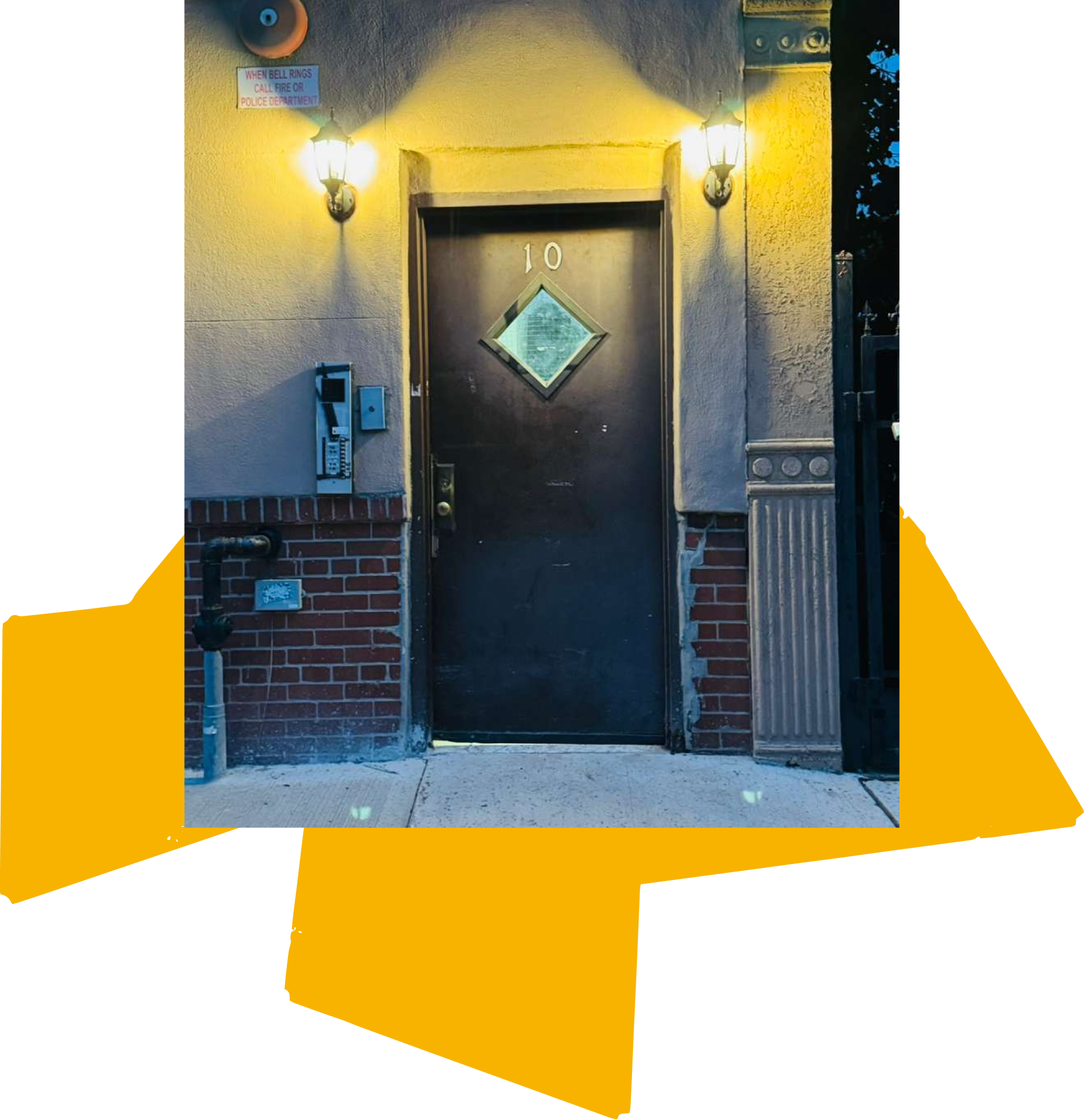
The AATA met in a room on Fulton Street in Bedstuy, where folks discussed these principles. Quickly outgrowing the small space, the students sought to find a space where they could also plan activities, and found one right around the corner, 10 Claver Place.
Evening classes for adults and young people sparked sewing, African dance, and African history courses. The community claimed the space and used it to the fullest. This organic unfolding led to the realization that creating our own spaces can foster our own community, school, and life services. Thus, The East, standing opposite to the exploitation and extraction of the West, was born.
The underpinnings of Kununuana Food Co-op and The Uhuru Food Co-op, both iterations within The East, were guided by the Seven Principles of Kawaida, and not the Seven Cooperative Principles. This demonstration of cooperation, community care, and Black nation-building, though not without flaws, demonstrates a historical pathway to concretizing a true for-us-by-us vision. The possibility of realizing this vision in the present is ever more possible by a true uncovering and honest reclamation of the past.
If the foundational center of The East was the school, Uhuru Sasa Shule, the cultural heart was the weekend evening jazz sessions. Mensah Wali joined The East as an idealistic twenty-seven-year-old. A jazz enthusiast, he frequented concerts at 10 Claver Place. His involvement with The East created space for a lifelong personal devotion to jazz. I caught up with Mr. Wali on Zoom as he sat surrounded by framed posters of past performances he and his wife planned as co-founders of Kente Arts Alliance in Pittsburgh.
On a trip to Ohio in 1969, he met the members of Pharaoh Sanders’ band. “These brothas were standing on their heads,” he recalls slowly and deliberately to me. He later realized they practiced yoga and followed a lifestyle centered on vegetarianism, herbalism, and natural living. In 1969, he followed suit.
Wali deepened his association with The East after the co-founder, Weusi, asked him to travel to Guyana with a group of nearly 60 people to help build a road to Brazil. The delegation first accepted an invitation from the current Prime Minister, the controversial Linden Forbes Sampson Burnham, who, after meeting The East leaders and pursuing his own pan-Africanism efforts, encouraged Black Americans to work and live in Guyana.
Wali spent about three days in the country’s capital, Georgetown, where he observed the country’s approach to cooperative ownership. Burnham famously expelled foreign-owned companies and restricted imports. My parents lived through this attempt at national self-determination, and my mom recalled using plantains for most recipes that required potatoes: making us plantain chips from scratch or using them for Moussaka. My paternal grandmother would bake bread in large batches and often gave it away to the neighbors. A backyard kitchen garden supplied our young family with most of our needs, and my mother’s American siblings would smuggle apples for her pregnancy cravings.
Burnham nationalized major industries and worked to develop the country’s internal trade systems. “It was the overall structure of the government in Guyana under Forbes Burnham that had a collective, cooperative kind of spin to it,” says Wali. The newly independent country was renamed the Cooperative Republic of Guyana.
After visiting the capital, the group took a small plane to the country’s interior to work on a road to Brazil. “After we took off, the only thing I could see was green tops of trees,” says Wali. The jungle was unforgiving; large trees created a canopy effect that kept out the sun and also ensured that the ground was almost constantly damp. Wali purchased new white sneakers for the trip and quickly regretted it. But while stomping knee deep in the mud, he started imagining what a co-op could look like back home in Bedstuy, Brooklyn.
The East had a mantra: Whoever had an idea for a project or new endeavor was in charge of seeing it through. Wali took charge upon returning to Bedstuy to create what he called a food co-op, but that began as a buying club. They called it Kununuana, which meant “buying together or with each other” in Kiswahili.

His vegetarianism was a driving force behind the co-op, creating resources for him, his wife, and other like-minded individuals. On Mondays, community members would place their grocery order and pay $20. Invariably, others would come later in the week, but by Thursday, Market Day, Wali and other members of The East would travel to the Bronx Terminal Market in Hunts Point and purchase potatoes, cornmeal, rice, flour, sugar, honey, and then other specialty items like dried fruits and nuts.
Distribution of the orders occurred on Fridays, but some members weren’t always on time, and so other items would stay in the space through the weekend. This conflicted with the jazz performances, and soon the co-op had to relocate from the 10 Claver Place location.
During Wali’s time running the co-op, a few members of The East made subsequent visits to Guyana and eventually signed a lease in 1974 for 300 acres of land in Yarakita/South Riumveldt Park in Georgetown. This land was to be cleared, inhabited, and finally established as the Uhuru Sasa Land Project, a cooperative farm with livestock.
The group’s ultimate goal was for the fruits of the Uhuru Sasa Land Project farm to be sent to the food co-op in Bedstuy. However, due to a lack of funding, the project fizzled in the late 1970s without ever getting to the point of international trade. When I asked Wali whether he shared the goal of an international farm-to-table, he said no and affirmed his commitment to a vegetarian lifestyle. “My dream was for all of us to be vegetarians. But that dream didn’t manifest either. Everybody loved chicken.”
Wali ran the co-op until 1974, when he ultimately decided to leave The East. Around that time, the needs expanded, and at the request or direction of Weusi, the buying club transitioned to a store that was stocked consistently with shelf-stable items and produce.
Before Baba Malik Yakini took his rightful place as a revered elder in the Black food justice movement, he was a young Detroit native who made frequent trips to New York and Chicago, drawing on the networks and energies of Afrocentrism in these communities. He was friends with Sister Tayani Odeleye, who lived in the neighborhood and frequented The East’s activities. “There was this like cultural community in New York that was more developed than what existed in Detroit,” Yakini says. He later became a distributor for Black News in Detroit. He saw the co-op and the school in action and credits the experience as part of the formation of his consciousness that would eventually lead him to co-found the Detroit People’s Food Co-op.
His introducing me to Odeleye over 50 years later, the warmth with which they regarded each other, and the shared nostalgia of the time gave me a tangible glimpse into what it may have felt like to be a part of the community. Sister Tayani had been a young mother during a visit to Guyana that happened some years after the trip Mr. Wali undertook to build the road to Brazil. She stayed in the capital and didn’t journey with Wali and the others into the developing community because she was caring for her youngest, who was just six months old. She was also a vegetarian, and she patronized the co-op because it was one of the few options in Bedstuy. Before the coop, her food shopping was a patchwork of sources, including Pathmark (one of the few full-service supermarkets in Bedstuy), the Korean-run “open-air markets,” and the neighborhood health food stores. The affordability and convenience of the co-op kept her coming back.
Her dear friend, Abena Suma, started working in the store during the transition. “When I came on board, Jitu wanted to have a full store so people could come in and be able to use it,” Suma says.
The store outgrew the 10 Claver Place location and moved into 1115 Fulton Ave, but then moved to the corner of Fulton and Claver Place (1107 Fulton) due to structural issues of the former location.
With each location change, a shift occurred with the operation. The problem of folks not picking up their items on Claver Place got solved with the move away from the jazz venue to 1115 Fulton Ave. Kununuana Food Co-op ultimately expanded operations, transitioning from a buying club to a full-service store in 1975 with the move to Fulton Ave and Claver Place.
It was then named Uhuru Food Cooperative. Sister Suma recalled that Weusi owned the building and lived above the co-op on the ground floor, which was a storefront. She spoke with pride and excitement about the developments. She was clear that she wasn’t there for the buying club iteration, but that, with the store, the objectives were clear: serve as many people in the community as possible using their resources. In this case, it was WIC and Food Stamps.
“Sister Achuda took the building and decided to turn it into a food store,” Abena told me, referring to one of the central workers of the food co-op. She described them buying a walk-in freezer, the basement for storage, and the large storefront window that advertised the medicinal herbs and fresh juices. They employed young people from the neighborhood who were paid by a community development agency. “We had about 20 young people who were able to come and work 10 hours a week and make money and be able to get a little paycheck, and they did the bagging and the sorting, and bringing the fruits and vegetables inside the walk-in refrigerator,” she says.
Sister Achuda recommended herbs for ailments as a kind of community herbalist. Ms. Abena recalled them being in business like this for close to ten years. She runs through the explanation of the operations as if in a race to present the multitude the co-op contained. However, her pride is palpable. She was nearly 19 when she started working part-time at the co-op. Though her “sister friend,” Ms. Tayani who was a college student at the time, focused more on the Black News arm of The East, she was often at the coop, shopping and hanging out with her friend.
It was known throughout The East that Weusi had a way of spotting talent in folks who couldn’t see it in themselves. He would ask members to step up to leadership, sometimes leading to lifelong careers in the fields he called them to. Sister Abena recalled that Uhuru Food Co-op applied for a community grant, but they were denied. Jitu asked her to represent the co-op in the appeals process. “He told me what to say, and we made our point, and I was able to go up and represent, and we were able to win the grant,” she recalled emotionally. “I was able to thank Brother Jitu years later, I was able to speak to him about maybe five or six years before he passed and thank him for that experience, because I was still in college, and I was able to go there and represent the food co-op, and I was given the lead position to oversee these young people.”
In her recollections, I saw so many of the reasons I joined and stayed with CBFC. Weusi was a charismatic leader who drew people in and pushed them into leadership, whether they were ready or not. With the CBFC, I learned how to facilitate meetings, write effective agendas, organize events, write grants, speak to electeds, and explain complex notions in verbal and written formats, all while being an under-employed first-time mother. Learning by doing had always been an ethos in our co-op development. It was touching to see how our unwitting predecessor functioned in much of the same way.
“We have some really successful young people that have come from our organization, I’m so proud to say,” says Sister Tayani, neglecting to include herself in that. The two friends went on to sustainable careers in community service.
As general manager, Sister Abena took pride in her job and the very real function of the co-op. She estimated that up to 80 percent of the co-op members used WIC or Food stamps. “Well, our folks were depending on help at the time. You know, a lot of the sisters in the culture were having lots of babies, and they had all this WIC and all this baby formula that our kids couldn’t eat, couldn’t drink, and couldn’t consume. And our sisters were nursing, and they needed good, healthy food. And we had sisters, Muslim sisters coming from up, from all over the place, being able to use their WIC at our store, and get soy, and we let them get nuts and stuff like that. That wasn’t on the voucher, but we gave the voucher a value and let them just spend what they wanted to get in the store. We kept good stuff for them, and they would come. We did that.”
Fulton St. has been a center of commerce, housing, and economic development in North and Central Brooklyn for over a century. The street begins at Brooklyn Heights and runs through the borough to the Queens border. Within that frame, Fort Greene (closest to Brooklyn Heights) runs along Fulton, followed by Clinton Hill, Bedstuy, Ocean Hill, Brownsville, and East New York ends the trail before we get to Queens. The stores and iterations mark the communities in those areas—demographics shaping the need and appearance of the commercial strip, block by block, neighborhood by neighborhood. Bedstuy in the sixties and seventies had bodegas, Korean-owned fruit and vegetable stores, clothing, books, etc. The world of The East was dotted along the thoroughfare, reflecting these needs and providing for its members and the community in those categories—all for us, by us.

However, gentrification irrevocably changed the Clinton Hill/Fort Greene portion of Fulton St. When DK Holland, co-founder of Greene Hill Food Co-op, first moved to Fort Greene in the 1980s, the community was a Black Mecca. Fort Greene was synonymous with Spike Lee, who built his film studio there, and Erykah Badu, who completed her classic album Baduizm, in the community. Black artists, scholars, and creators formed a community soundtrack reminiscent of the Harlem Renaissance. That started to change in the early 2000s. Police brutality, the introduction of Pratt Institute, and the Brooklyn Academy of Music created a perfect confluence of opportunities to remove the “Buppies” and replace them with a white population. Between 2000 and 2017, the Black population in Fort Greene dropped from 42 to 26 percent.
During that period, in 2007, Holland, who recently joined the famed PSFC wanted to create a similar model in her area. She had a friend who wrote for the Brooklyn Paper and published an article about it, in the hopes that like-minded folk would find her. Two men did, and circulated a survey throughout the neighborhood. Over nine hundred folks supported the creation of a neighborhood food co-op.
She assembled folks at the Lafayette Presbyterian Church. “I applied a bunch of Quaker principles to what we were doing because I’m a Quaker. Meeting in a circle, not meeting in rows, not establishing any leadership. A level playing field and everyone's a leader,” she told me.
The co-op-in-formation created committees from the attendees’ strengths and interests, and the organizing flourished. Holland enlisted the help of Joe Holtz, co-founder of PSFC, and remarked on the generosity of the long-standing food co-op with their information sharing. In 2010, they secured a space a block off of Fulton Ave, called Putnam St., for $500 a month.
Starting as a buying club, they transitioned to a full-service store in 2011. They raised $100,000 and had 300 members. Beyond the petition, their outreach in the gentrified community consisted of a few visits to the neighboring New York City Housing Authority (NYCHA) campuses. “We were reaching out, doing a lot of surveying. We surveyed in the public housing: Walt Whitman houses and Farragut houses, and we did an interview with them and said, ‘Why do you need affordable food?’ and it was really interesting to see how people who had health issues needed organic produce and couldn’t get it. At that point, you know, there was only one option down here was Pathmark,” Holland said. However, the outreach didn’t translate into patronage, and Greene Hill Food Co-op (named from the contraction of the adjacent neighborhoods Fort Greene and Clinton Hill) was (and is currently) known to be majority white.
The owners of the Putnam Ave. space didn’t renew the lease, and the Greene Hill Food Coop moved to 1083 Fulton St. When I mentioned The East, the co-op of the past, which I was writing about, she excitedly countered with a piece that was written in Greene Hill’s newsletter about it. An excerpt reads, “Brooklyn’s history is as rich and storied as the beautiful communities of our neighborhoods. Just around the corner from our own Greene Hill Food Co-op stood The East Educational and Cultural Center for People of African Descent, a community organization founded in 1969 to promote black self-determination and community building. The East also had a coop, though little information is available about it online today.”
Greene Hill, like most, adopted the Seven Cooperative Principles. As a Quaker, she found familiarity in the rules adapted from its 19th-century beginnings. “Honest food, for honest prices,” the refrain of the Rochdele pioneers, explains a commitment to fairness and egalitarianism, a sense of community and economic justice, all aligned with her beliefs.
But she never quite understood the stubborn homogeneity of the co-op she co-founded. “As I said, we went down and talked to people in public housing, and we were talking to people, but you know, like that didn’t mean that we were able to draw those people into a meeting of primarily white people,” says Holland. “That just meant that they would be interested if something opened, and yes, they needed this. We talked a lot about diabetes and health issues.”
“But there was the concept of working at a grocery store that’s run by people working side by side,” she says, zeroing in on the core of the problem from her experience. “It was a leap for a lot of people who don’t have the time or money to spend on something they don’t get paid for directly.”
As a Black woman who co-founded a food co-op a few blocks away, CBFC was always meant to be an exercise of Black-led self-determination, even if we weren’t always aware of The East organization and the co-op they incubated. We did think that there would be an opportunity to join forces with Greene Hill when they had to leave their original location and were eyeing Bedstuy, our neighborhood, for an affordable option. We had discussions about our intentionality around being Black-led, and centering long-term residents in our organizing.
In the parallel world she was unearthing, co-ops were mainly run and supported by white folks. Park Slope modeled this, and the co-op support institutions all aligned in this narrative. Early iterations of our orientation presentation mused on the white connotations of a co-op, but disabused them with the recently published text, Collective Courage: A History of African American Cooperative Economic Thought and Practice. Dr. Jessica Gordon Nembhard published a seminal text on Black co-op development in 2014. There was a consciousness shift occurring about what co-ops were, and who were early adopters of the philosophy, practice, and resulting businesses.
Had there been a robust telling of The East’s story and the food co-op contained in the society, could Holland claim innocent ignorance of Black-led co-op development? Would the story of Greene Hill, which was the geographic progeny of Uhuru Food Coop, be told differently?
Instead, Holland’s personal attempts at recruiting Black residents (somewhat justifiably) lacked this context. “I remember I said to one of my friends who happens to be Black, we just started a co-op,” she recalls to me. “And he said, I’ll never work in a grocery store. And I thought, okay, I mean, what can I say? What can I say? There’s nothing I can say.”
In A View from The East, each chapter is organized by one of the Seven Principles of Kwanzaa. “Nia” meaning “purpose” talks about the early beginnings of the organization, its rebellious underpinnings, and its burgeoning political consciousness. The school was detailed in the chapter for self-determination or “Kujikchagulia” and “Imani” or “Faith” speaks of the cultural nationalism, nation-building, and legacy of The East. “The students recited [the principles] every day, numerous times a day, and it was the guiding principle of the organization,” says Dr. Shabaka. “When I joined, as a member, I was given The East workers’ manual. That East workers’ manual was the quotable Karenga.”
All of The East organization, which includes over eighteen operations, had the principles as its infrastructure. Some of the members collectively celebrate Kwanzaa together to this day, where each day, starting December 26th until January 2nd, centers on one of the principles. Through acculturation, participating in one or more institutions meant having a shared language, a way of being, and a consciousness.
No one within The East practiced the Seven Cooperative Principles. However, in today’s landscape of co-op development, it is either a tacit or outrightly practiced aspect of food co-ops. Some Black co-operators struggle with the Eurocentric ethos, finding ways to adapt it to the culture. However, compared to the Seven Principles of Kwanzaa (Nguzo Saba), there are clear similarities: they all espouse values of cooperation, community solidarity, and a rejection of individualism and capitalism.
However, there is one distinct difference. “Imani” centers a belief in the unseen, faith in one’s self, one’s family, community, the ongoing struggle for freedom, and finally faith in a spiritual foundation that culminates all the other principles. While the Rochdale-derived principles are proudly secular, all that underpins Black movements throughout history has been faith-rooted in spiritual foundations, an adherence to a future and a world you have not yet seen, but work toward its creation.
The East founders had exhausted all options for Black liberation under the current systems. Schools failed the students, unions failed Black teachers, food stores were unaffordable and of poor quality. The Black consciousness movements of the 1960s needed real-life applications and world-making to truly make a difference in people’s lives.
Though The East as an institution ended in the early 1990s, its legacy is instructive in Black movement building relevant today.
If applied to current co-op creation, we would see the need to connect all movements of Black struggle into a faith-fueled world-building entity. Instead of workshops on getting loans for capital funding, we would talk about creating our own cooperative banks that fund us sustainably. Instead of conversations on outreach and marketing, we will talk about the irresistible cultural hub that is the central nerve of our movement-building. Instead of a market study, we would do extensive Black-led focus groups and community research into our own buying habits, uncensored and divorced from capitalistic frameworks. We would have schools for general managers and not believe in the inevitability of burnout for one individual, who seems to be the linchpin of a co-op’s success or failure.
We would not only be anti-capitalist but also be embedded in world-creation outside of capitalism. “We believe in cooperative economics as a stage to socialism, where the people own the leadership, not one person owning everything. That’s what we were brought here under capitalism. We were the first capital,” says Dr. Shabaka. “It was Black people’s labor that fueled capitalism. So why we wanna imitate that?”
White-led co-op development can have anti-capitalist leanings, and often does. Yet their success rate and sustaining philosophies see them more and more amenable to an economic reality that was created for them. Greene Hill’s lack of true community building (beyond spurious outreach), the fact that they could survive as predominantly white in a historically Black community, shows the sustaining power of capitalism as a cultural movement.
Baba Malik’s characterization of Black-led day’s beginning is a call and sustaining approach to Black movement building. The East gangsta’d the space all up, down, and through the commercial spine of Central Brooklyn. They made economic development work for Black people and took care of Black families from pregnancy, to early childhood, to those rebellious teenage years (that truly characterized the energy of The East), all the way through adulthood.
Black movements don’t create markets for our people to participate in. We don’t just respond to the lack of vegetarian options or the dearth of values-aligned food procurement in our neighborhoods. We engage in aggressive space disruption and world-building that blueprints our survival.
Legacy is unavoidable. I practiced co-operativism, unaware that the country of my birth not only engaged the ideology as a national exercise, but inspired the neighborhood I called home to do the same. Forty feet, and forty years separate two co-ops, yet the energy of the streets echoes its history throughout the generations. Though the interpretation is distorted and often misinterpreted, it’s up to us to continue to decipher its tenacious messaging: We don’t go very far alone, whether as individuals or movements. Our ancestors inhabit the ground we stand on, and they instruct us, guide our steps, and bring us where we need to be, unwittingly. Opening our eyes to our true history may take us further along.

